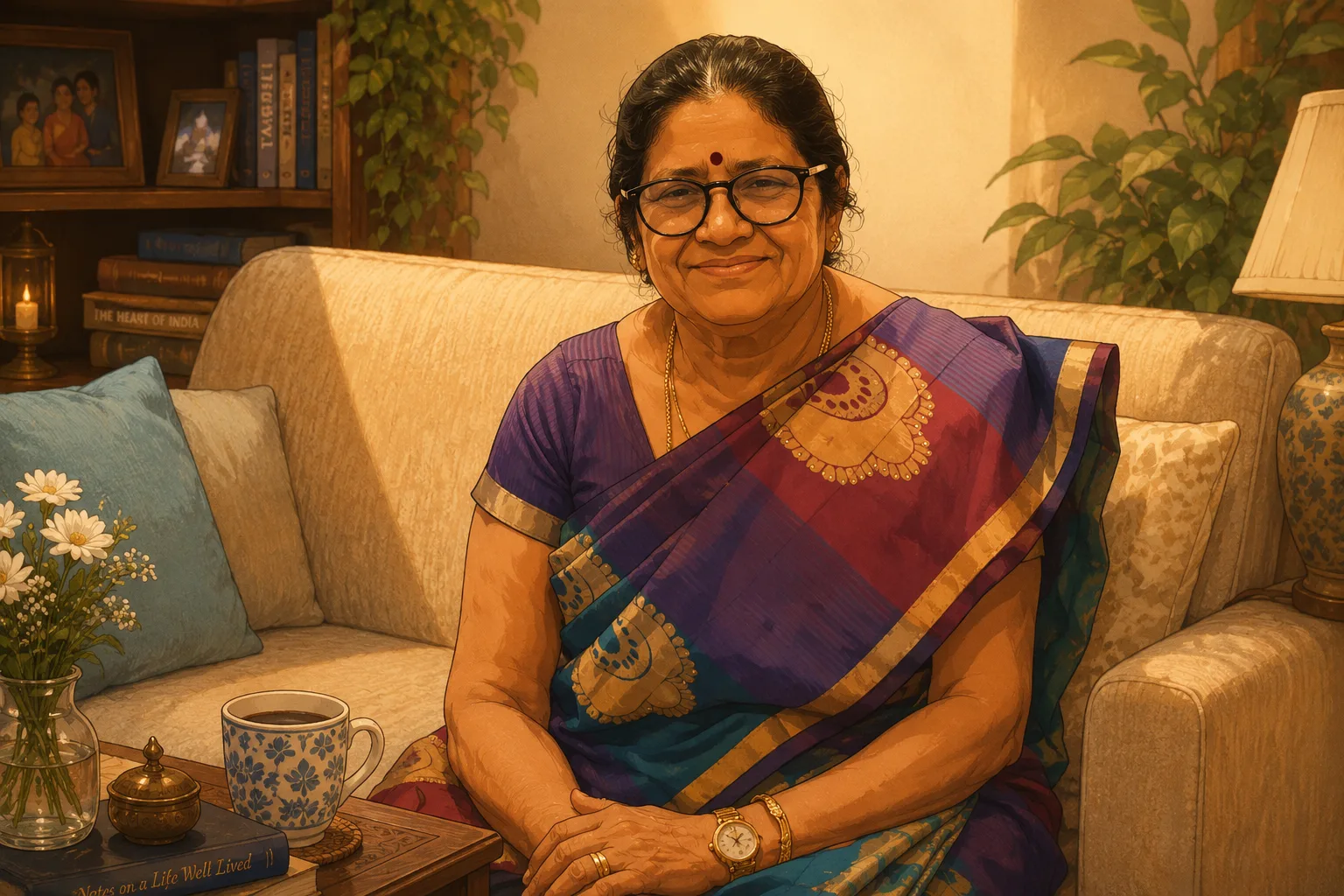
From one woman to another
The day I got married, I began calling her mama — as is customary for a daughter-in-law in India — but the truth is, she became so much more than that title ever suggested.
I met her for the first time before the wedding, when I traveled with my parents to see her home, meet papa and chechi, and catch my first glimpse of the family I was about to join. She welcomed us with a warmth I still remember clearly — a hardworking, traditional woman who opened her home and her kitchen to strangers who would soon be family. She fed us handmade delicacies from her region, made sure we wanted for nothing, and by the time we left, our hearts were as full as our stomachs. We had made friends before we had even become family.
I saw her again at my wedding, right as I was trying to find my footing in a new culture, a new language, a life I didn't fully recognize yet as my own. It's customary in my husband's family for the new bride and groom to visit close relatives, and she and papa accompanied us all the way to Mumbai before we flew off to Europe. On one of those final visits, I remember standing in front of my suitcase, panicked, unsure what a "proper" new bride was supposed to wear. She simply told me to be myself — to wear my denim and a nice top. It seems like such a small thing, but to a young girl stepping into a new identity, it felt like permission to still be me. I have carried that gift with me ever since.
In the months that followed, she and my father-in-law patiently taught me the traditional recipes of their homeland, one dish at a time, until cooking them became second nature. Today, my friends know me for my Malayali cooking — a quiet inheritance from her, passed through flour-dusted hands and endless patience.
Another memory that stays with me: arriving at her doorstep five months pregnant, straight from London, into a household and a life I barely knew yet. She cared for me the way only she could — with the instinct of a healer and the devotion of a mother. She made sure I ate on time, gave me my daily oil baths, never let me miss a supplement. And when my son was born, she took charge again — overseeing my diet, my massages, my recovery, my earliest days of learning how to be a mother myself.
It wasn't always easy between us. We came from different worlds, different upbringings, and we didn't always see eye to eye — both of us right, in our own way, from where we stood. But even in our differences, what I remember most is watching her move through life like a woman who never stopped giving. She was the busy bee of the household, the first person her community turned to for medical help, the one who made sure everyone else was fed and cared for before she ever thought of herself. It cost her, I think, more than she ever let on.
Around the time of Covid, she started complaining of aching legs and sore feet, and we all dismissed it as age. Later, discoloration and cold sores appeared on her ankles, and doctor after doctor offered little relief. Then, one day, she began slipping into delirium. She was rushed to the hospital, and both her sons flew to be by her side. The diagnosis was COPD — a lung disease with no cure, already advanced beyond repair. No one had seen it coming, or understood how it had grown so severe. She spent much of her waking life afterward hooked to a BiPAP machine, and she bore it all with a quiet, unshakable courage. Three years and three hospitalizations later, we lost her on August 1st, 2026.
I will never forget that phone call. My sister-in-law's voice, breaking, saying the words "Velliamma poyi" — Aunt has left us. A sudden, sinking stillness came over me. But it lasted only a moment, because right beside me sat my husband, and I knew his loss was immeasurably greater than mine. He had just lost his mother. His first love. He had seen her in person only the week before — he may have been the last face she recognized, the last person she waved to, just hours before she left this world. Our men are taught to be strong, to carry grief like steel. In that moment, all I felt was sorrow — not just for her, but for him, and for the quiet unfairness of what he'd been taught to be. We speak so often about the burdens women carry in this world, and rightly so. But in that moment, I saw with sudden clarity the burden placed on men too — how early they are taught to armor themselves, how thoroughly even grief, the most human of emotions, gets trained out of them.
I knew, in that instant, that no words would be enough. So I did the only thing that felt true — I held him, long and tight, and later made him a hot, comforting meal. It was the same language of love I had watched my mother-in-law speak for as long as I had known her, and in that moment, I understood I had been learning it from her all along.
They say your life flashes before your eyes in your final moments. I've learned the reverse is also true — when you lose someone you love, it's their life, and every joy you shared with them, that comes rushing back to you.
She was my mother-in-law because I married her son. But the bond I will carry with me always is something simpler and deeper than that — the bond of sisterhood, one woman to another.