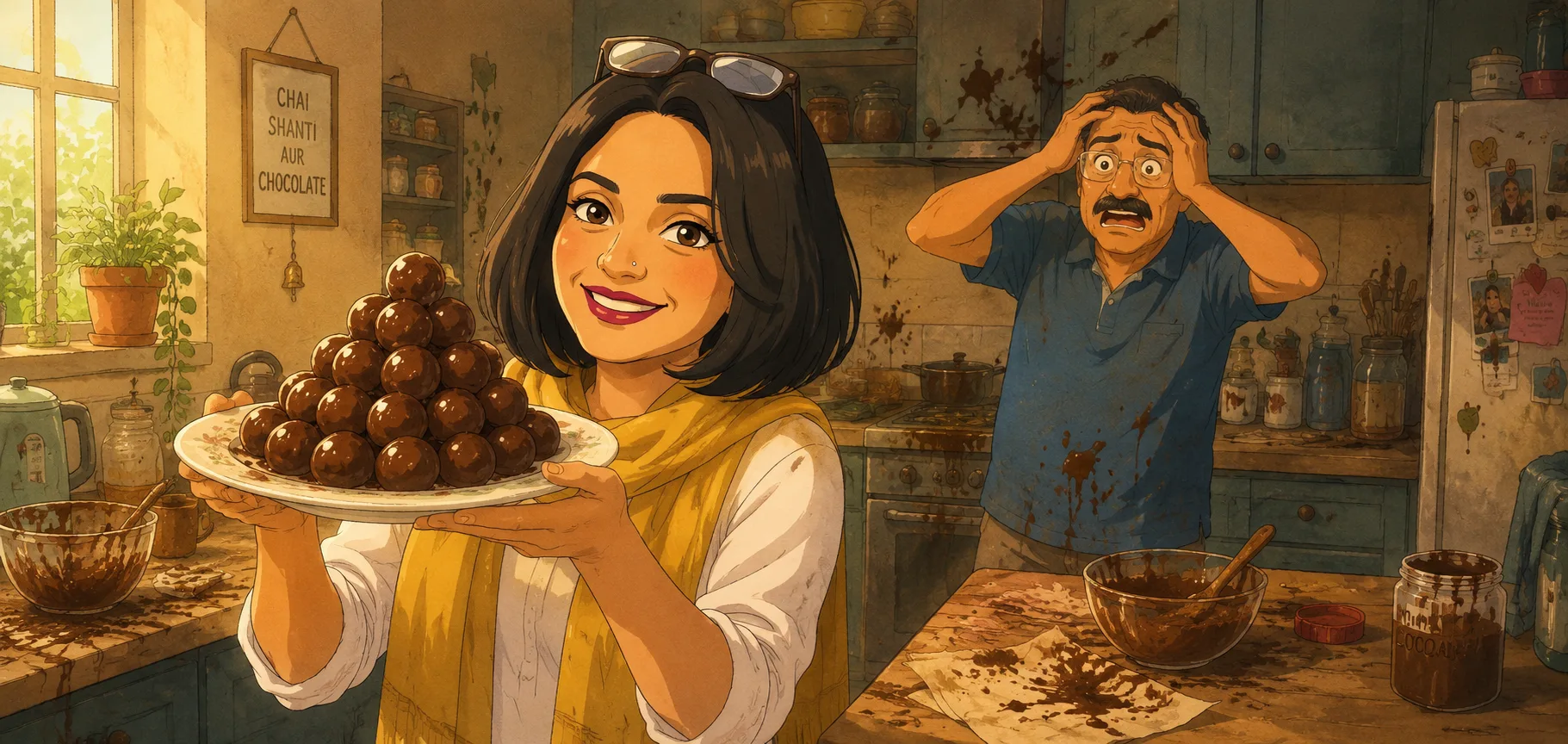
There's a particular kind of optimism that only exists in the weeks after finishing your degree — that blissful, deluded window before results arrive, when you genuinely believe you are capable of absolutely anything. You've just survived years of academic pressure. You are unstoppable. You are creative. You could probably, you think to yourself, be a pastry chef.
Reader, I could not be a pastry chef.
It started innocently enough. With no lectures to attend and no dissertation to panic about, I had turned the house into my personal laboratory of self-discovery. One day I rearranged all the furniture. Another day I attempted abstract art with things I found in the attic. But eventually, inevitably, I wandered into the kitchen — which, looking back, was the moment everything went wrong.
I found a Pillsbury rice cooker cake mix at the back of the cupboard. Chocolate flavour. I followed the instructions with the kind of careful precision I had applied to my actual degree, and waited. The kitchen filled with the warm, promising smell of chocolate. I was a genius. Gordon Ramsay, essentially.
Then I opened the lid.
The cake had technically cooked. In the same way that a car crash is technically a parking attempt. It had absolutely no intention of holding itself together, and the moment I tried to remove it, it collapsed into a warm, crumbly heap — like a sandcastle at high tide, except somehow more depressing.
Now, a sensible person would have eaten the crumbles with a spoon, accepted the lesson, and moved on. I was not a sensible person. I was a freshly graduated optimist with too much free time and a deeply misplaced belief in my own abilities. I went to the shop and bought several chocolate bars, melted them down, and poured them heroically into the ruins of my failed cake. Then, treating the whole sorry mess like bread dough, I began to knead.
My first creation was something resembling a pancake — flat, dense, and deeply suspicious-looking. I gave it to my sisters to taste, and their faces performed a remarkable journey from curiosity to polite suffering to outright betrayal, all in about four seconds. Feedback: not good.
Undeterred — and this is key, I was completely undeterred — I pivoted. I mixed in some raisins, rolled the whole catastrophic mixture into small balls, and held them up to the light. They were, I must admit, genuinely beautiful. Glossy, round, studded with raisins. They looked like something from a Michelin-starred dessert menu. They looked like they belonged under a glass dome in a Parisian patisserie. I was back, baby.
Then I tasted one.
It had the texture of chocolate-flavoured cement and the aftertaste of regret. Swallowing it required genuine commitment — the kind of grim, determined effort usually reserved for taking bad medicine. It didn't so much go down the throat as drag itself down, slowly, reluctantly, leaving a trail of dense, doughy devastation.
I powered through anyway. I rolled every last one of them.
Then I arranged ten of them into a perfect pyramid on our nicest plate, scattered raisins around the base as garnish, placed it on the coffee table like a trophy, and waited for my father to come home from work. He always arrived hungry. This was going to be his lucky day.
He walked in, saw the plate, and his face lit up with the pure joy of a man who believes he is about to enjoy a treat. He washed his hands at speed. He sat down. He picked up one of the balls and popped the whole thing into his mouth with tremendous enthusiasm.
Time, for a moment, seemed to slow down.
I watched his expression travel, in real time, from delight to confusion to something that can only be described as deeply offended. He didn't spit it out — he was far too dignified for that — but he sat there chewing with the expression of a man who had been personally wronged by a dessert.
"What," he said carefully, "in God's name is this?"
"Chocolate balls," I told him proudly. "My own creation."
He looked at me. He looked at the remaining nine balls in their proud pyramid. He said nothing, stood up, and walked with great purpose to the kitchen to find himself some actual food.
I still had roughly twenty of the things left.
So I arranged twelve of them on our best bone china plate — the bone china, the one reserved for guests — and walked them over to the neighbours as a gift. A gesture of goodwill. A treat, I told myself firmly. A treat from a baker.
The next day they returned the plate. On it was a generous helping of gajar halwa — beautiful, fragrant, made with carrots and cardamom and cream — and a note saying they had loved the chocolate balls.
Buoyed by this incredible response, I immediately offered to send them home with more.
There was a brief pause.
Then they remembered somewhere they urgently needed to be, gathered themselves with impressive speed, and left.
The remaining chocolate balls sat on the counter for three days. Nobody touched them. Eventually, they disappeared — I suspect my mother disposed of them quietly, without ceremony or comment, in the way that only mothers can.
The bone china, at least, was returned undamaged. Every cloud.